


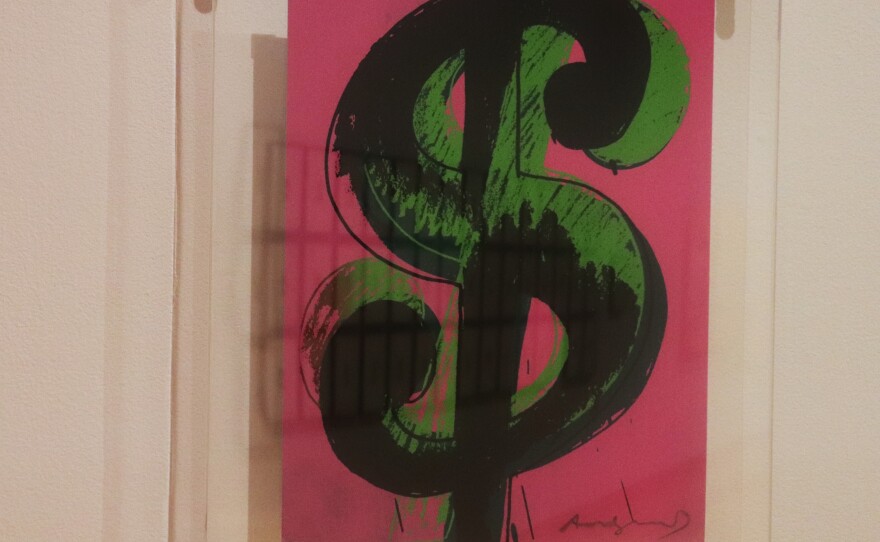
The work of the ‘Prince of Pop Art’ is on display in Tampa, but there aren't any Campbell soup cans or Marilyn Monroe portraits.
Until July 25, visitors to the University of South Florida Contemporary Art Museum (CAM) can see over 150 rare Andy Warhol photographs and prints.
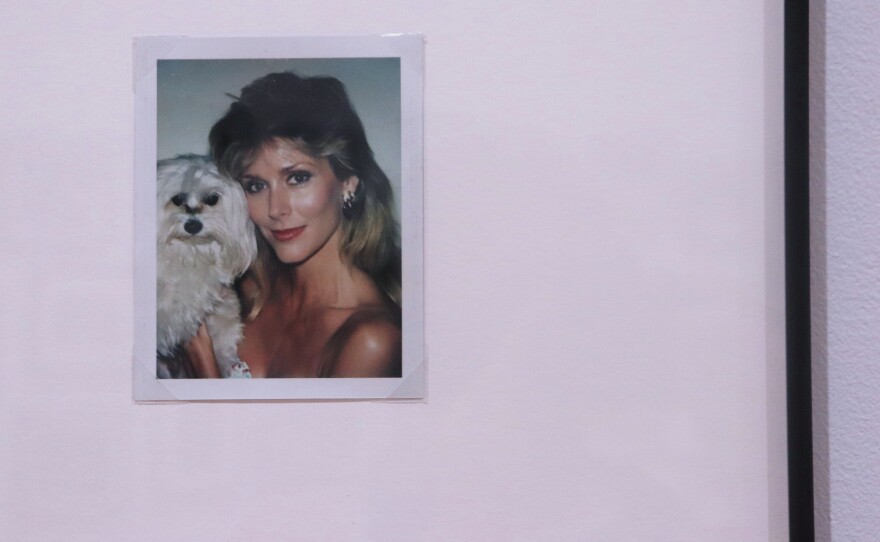
The exhibit, “Uncelebrity,” features never-before-seen black-and-white shots, Polaroids and Gelatin silver prints from the Andy Warhol Foundation for the Visual Arts in New York City.
Jennifer Miller, CAM’s curator of public art and education, said this side of Warhol’s photography has a different touch than his best-known celebrity and consumer product portraits.
“Andy Warhol was really interested in the banal, the mundane, and a lot of these images are very intimate, creating this catalog of everyday experiences from his personal perspective,” Miller said.
In 2007, the Foundation’s Photographic Legacy Project gifted nearly 30,000 photos to 180 university museums — including the USF College of Design, Art and Performance.
The Photographic Legacy Project aims to "foster understanding of the incredibly vital role that photography played throughout Warhol’s art and life" while broadening access to Warhol's work, which has seen single pieces sell at auction for as much as $195 million.
K.C. Maurer is the chief financial officer for the Foundation, which makes grants to support the creation of new work by experimental visual artists.
“We made a grant of artwork to Western Wyoming Community College,” she said. “They were able to get their state legislature to pass a bill that provided the college with $150,000 to increase their facilities so they would be able to take care of the work properly.”
Participating universities must exhibit the work every 10 years and make it available for faculty and student scholarship.


Bottom Row: Wilson Kidde and Unidentified Man (1980); Union Square (1982)
All: Andy Warhol, Gelatin silver print

“Uncelebrity” marks CAM’s first joint display of items from the 2007 collection and a later screen print donation.
Shannon Annis, CAM’s collections and exhibitions manager, said Jocelyn Marshall’s spring Contemporary Art History class prompted USF to finally unite the two gifts.
Excerpts from student essays about the Photographic Legacy Project are featured throughout the exhibit.
Annis said Warhol’s fascination with celebrity culture has particular resonance for Gen Z, who grew up with their favorite stars at their digital fingertips.
“The persona he had out in the world is very relevant to social media now,” Annis reflected. “That anonymity you can have now could be very appealing to him, and just the access to celebrities you could have.”
Warhol was known for his high-profile friendships with — and screen prints of — A-list stars like Mick Jagger and John Lennon.
“Uncelebrity,” though, shows once-household names who faded into obscurity, like figure skater Dorothy Hamill, and other unidentified people who crossed Warhol's path. There’s also a snapshot of Truman Capote, who Miller joked is relatively unknown to Gen Z.
CAM’s summer programming also includes “Breaking Barriers: Gathering Light,” a selection of photos from veterans who took part in a CAM workshop.
A hands-on activity, “15 Minutes,” bridges both exhibits by asking museumgoers to use light in new and surprising ways. Visitors contribute their own Polaroids, riffing on Warhol’s prediction — “in the future, everyone will be famous for fifteen minutes.”
While the Polaroids served as the basis for commissioned portraits and pop art screen prints, Warhol used black-and-white photos as a kind of diary, cataloguing New York street, nightclub and flea market scenes.
Christian Viveros-Fauné is CAM’s curator-at-large. He views Warhol less as an intellectual and more as a keen observer of celebrity culture and capitalism.
“I don’t think Warhol is the guy you go to for great insights about love, or man’s inhumanity,” Viveros-Fauné said. “He got a certain thing about American culture down pat — it is, in many ways, tremendously shallow and motivated by money.”
Viveros-Fauné echoed Miller’s remarks about “Uncelebrity” as a more intimate insight into Warhol’s psyche.
For example, a late 1970s series of Polaroid nudes with a male model is markedly less commercial-friendly than his Pop Art classics.
“That telescopes into a far more explicit queerness than I think Warhol was actually comfortable embracing during his lifetime,” Viveros-Fauné said.
“Uncelebrity” is open Monday through Saturday; admission is free to the public.
