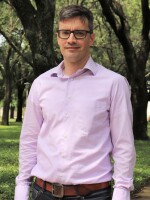
One author's "love letter" to her parents gives a peek into a community anchor in St. Petersburg.
Amaris Castillo grew up around bodegas, which are small, owner-operated convenience stores.
Her new book "Bodega Stories" is a portrait of the bodega her parents own in St. Pete called Orlando Latin Market. The book is part autobiography and part oral history of her family and the customers who frequent the store.
"Including Castillo's own family's story from the Dominican Republic to New York to Florida, 'Bodega Stories' is a portrait of finding home — between the cultures we inherit and the ones we embrace," a book description reads.
Talking to host Matthew Peddie on "Florida Matters Live & Local," Castillo gives insight into her upbringing and how the bodega is a home away from home not just for Dominicans, but Puerto Ricans, Colombians, Cubans, Haitians and more.
The interview below was edited for clarity and brevity.
Tell me how your dad got his start as a bodeguero.
Both my parents are from the Dominican Republic. My dad migrated to New York City when he was about 18 years old and started immediately working at his uncle's bodega in Brooklyn — his tío, Bobito.
And he just continued working in bodegas for years until he wanted to move us to Florida for a more tranquil life. I think it had also something to do with him wanting to fish. And so then we ended up in Florida, and in the early aughts, around 2005, he and my mom opened Orlando Latin Market in St. Pete.
What was that like? You spent your formative years in Brooklyn and going from there to Tampa, it must have been a big change of pace for you.
It was definitely a culture shock. I spent my freshman year at LaGuardia High School of Music & Art and Performing Arts in Manhattan. And then to go from there to Clearwater High School was a major culture shock. I was not great at being the new kid. I was shy and just trying to find my footing. I missed like the hustle and bustle of being in New York and being able to get on the train and on the bus.
What does Orlando Latin Market offer, and how typical of it is it of like other bodegas that you've seen?
I would say it's a portal to ... I joke with my dad that when I walk in, I'm like, "Papi, I walk in here, and I feel like I'm in a different country or different countries."
Here in the bodega, you'll find very niche products like hair conditioners from the Dominican Republic — specific scents, perfumes that Cuban women love.
You'll even find ... there's this cough syrup called Rompe Pecho, which basically translates to "break chest." It's promising that it's going to cure your cough.
"I realized I can't write a book about my parents' bodega without explaining my relationship to it and what it means to me and how it hasn't always been an easy or fun relationship."Author Amaris Castillo
It's where people go for familiarity. Also there's the added elements of people go there to seek jobs. I've been in the store when people have gone up to my dad and be like, "¿Tienen trabajo?" or "Do you have work?"
Unfortunately, there are times where he's not hiring, but there's the bulletin board outside where people post jobs and services. And sometimes, I have observed people just go to the store just to look at the bulletin board. They're just going to the bulletin board to see what the notice is or if they have their own notice to post on there.
So I would say the day that they close, it will be sad for me. It means a lot to me. It's my parents' livelihood. I also feel like it's a connection to my heritage. When I walk in is where I practice a lot of Spanish, which is great.

There's one chapter where you're talking about varieties of Spanish you'll hear. You talk about something like contemplative Spanish that'll kind of drive you bananas. What do you mean by contemplative Spanish?
Depending, it's like who is on the other line that they're taking so long to say what they're seeking or need. But you just never know when you get a call to the bodega what kind of Spanish you're going to hear on the other end.
There's hurried Spanish, which I would say Dominicans talk fast. I would argue Cubans talk faster. But then you'll hear slow Spanish. I think it speaks to the beauty of the language, though. And English also has its twangs and its different accents.
What is it about the life of a bodeguero? Your dad took a break from it at one point, but then he came back to it. Is it sort of like a calling for him?
I think it's hard when you don't finish school. My dad didn't really finish college or anything like that. He had told me, "I had never planned to come to New York," but his uncle needed someone he could trust with his bodega in Brooklyn. And that's how my dad ended up there at 18.
It is not an easy life. It's very grueling. It's many long hours, many missed holidays, missed parties and also it can feel claustrophobic cuz you're behind a register. And oftentimes, the bodeguero is the manager, is the clerk, is the stock person, is the one fielding complaints and all kinds of erratic behaviors that walk in and characters as well. You have to manage all that.
Also, my dad, he experienced a lot in the '80s and '90s as in working in bodegas in Brooklyn. He was the victim of a few armed robberies and just very traumatic experiences that I didn't find out about until I was an adult cuz that's the kind of thing that a parent shields their children from.
I'm just so glad that nothing worse happened and that he's still here. But I think he just continued cuz it's what he knows. He did want a break at some point, and he tried to open like a palm tree business. Didn't end up working out, and then he felt refreshed and reenergized to get back into the bodega. My mom was happy to have her partner back in the business.
Did you have any trepidation about turning your reporter's eye on your family and yourself and kind of examining your own sort of upbringing at the bodega?
Yes. In the beginning, I actually had less of myself in the book because I wanted it to be about the people.
Then I realized I can't write a book about my parents' bodega without explaining my relationship to it and what it means to me and how it hasn't always been an easy or fun relationship.
It's been complicated at times — especially when I would help them during my college years. And after I couldn't find a job in journalism, I worked there as a cashier for some time.
But I made sure what's in the book was what my parents were comfortable with — even the more difficult stories — like my dad being a cancer survivor as well.
I wanted to give them the utmost respect and this is really a love letter to my parents. But I was definitely was aware that OK, this is going to be in people's homes, and it kind of belongs to the readers now.
This story was compiled from interviews conducted by Matthew Peddie for "Florida Matters Live & Local." You can listen to the full episode here.